
Strong upturn in Irish manufacturing production maintained in May
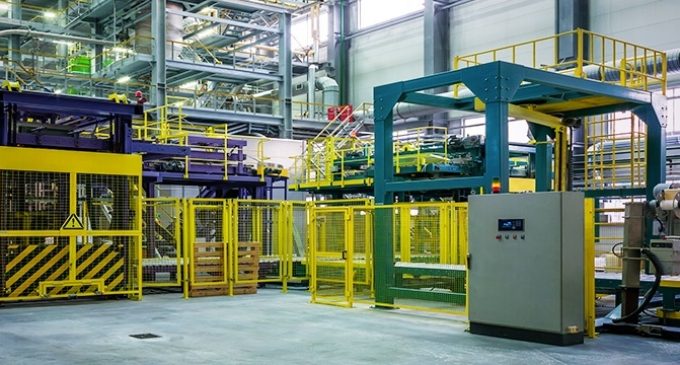
Irish manufacturers recorded another robust increase in output volumes during May, extending the current period of growth to five months. This was supported by a solid rise in total new work as improving domestic demand helped to offset weaker export order books. While some firms noted subdued spending by US clients, comments from survey respondents suggested that concerns about the impact of tariffs and global trade tensions had eased in May. As a result, business activity expectations for the year ahead recovered from April’s eight-month low and staff hiring edged up to its fastest since January.
The headline AIB Ireland Manufacturing PMI® is a composite single-figure indicator of manufacturing performance. It is derived from indicators for new orders, output, employment, suppliers’ delivery times and stocks of purchases. Any figure greater than 50.0 indicates overall improvement of the sector.
Adjusted for seasonal influences, the AIB Ireland Manufacturing PMI registered 52.6 in May. That was down slightly from April’s 34-month high of 53.0 but above the neutral 50.0 threshold for the fifth month running, the longest growth sequence in over two-and-a-half years. The latest improvement in overall business conditions was driven by relatively strong rates of output and new business growth. In each case, the pace of expansion remained close to its three-year high seen in April. Survey respondents commented on resilient demand conditions, improving sales pipelines and the impact of long-term business development plans.
 Export sales remained a weak spot in May, with total new work from abroad decreasing for the second month running. Moreover, the pace of contraction accelerated to its fastest since December 2024. Goods producers noted subdued spending by US and UK clients, linked to elevated global economic uncertainty.
Higher levels of new business contributed to a solid upturn in purchasing activity across the manufacturing sector. Input buying has now increased in three of the past four months. However, tighter inventory management continued in May, as signalled by an accelerated reduction in stocks of purchases. Meanwhile, post-production inventories dipped for the fourth successive month. Manufacturers often commented on efforts to improve working capital efficiency.
Supplier performance deteriorated slightly, which reversed the marginal improvement seen in the previous survey period. Those reporting longer wait times for vendor deliveries generally cited transportation issues, in particular due to international shipping delays.
Cost pressures remained robust in May, despite the rate of input price inflation easing from April’s 26-month high. A number of firms noted rising prices paid for agricultural commodities and other raw materials. Some manufacturers suggested that exchange rate appreciation against the US dollar had helped to limit price pressures from imported items. Factory gate charges increased at only a modest pace, although the latest rise was the fastest seen for three months.
May data suggested a lack of pressure on business capacity as backlogs of work decreased for the third month running, albeit at only a modest pace. Improving order books and forthcoming new projects nonetheless spurred a sustained upturn in staff recruitment. The rate of job creation edged up to its fastest since January.
Greater employment numbers also reflected an improvement in business activity expectation for the year ahead. Latest data indicated that optimism levels recovered from the eight-month low seen in April amid fewer comments from survey respondents about the likely impact of US tariffs on business prospects. Around 39% of the survey panel predict an increase in output during the year ahead, while only 9% forecast a reduction. That said, the degree of confidence was still lower than recorded on average in the first quarter of 2025.
Commenting on the survey results, David McNamara, AIB Chief Economist, said: “The AIB Irish Manufacturing PMI indicated that the sector’s upturn continued in May, with the index at 52.6, down slightly from 53.0 in April. The rise in May was broad-based, with robust growth in output and new orders, and signs of easing tariff-related concerns. The Irish manufacturing PMI remains above the flash May readings for the Eurozone, US and UK at 49.4, 52.3 and 45.1, respectively.
“Output rose strongly in May, amid a general rebound in domestic demand conditions. This was reflected in robust growth in new orders. Nonetheless, some respondents noted weak US and UK demand, dragging down export orders, for a second consecutive month. Employment expanded, with the pace of hiring picking up as firms reacted to rising workloads. The purchases index remained at an elevated level, signalling a continued sharp upturn in input buying by firms.
“The May survey also showed a further sharp increase in input prices, with the index easing only slightly from the two-year high reached in April. Higher input prices were linked to commodities and other raw materials. Output price inflation accelerated slightly, as manufacturers passed on higher input costs, but the rate of inflation remains well below that observed throughout the past 12 months. Despite ongoing geopolitical and tariff uncertainty, Irish manufacturers maintained a generally upbeat assessment of the outlook for activity levels over the coming year. Around 39% of the respondents predict a rise in output levels during the year ahead, while 9% expect a decline.”